
At a glance
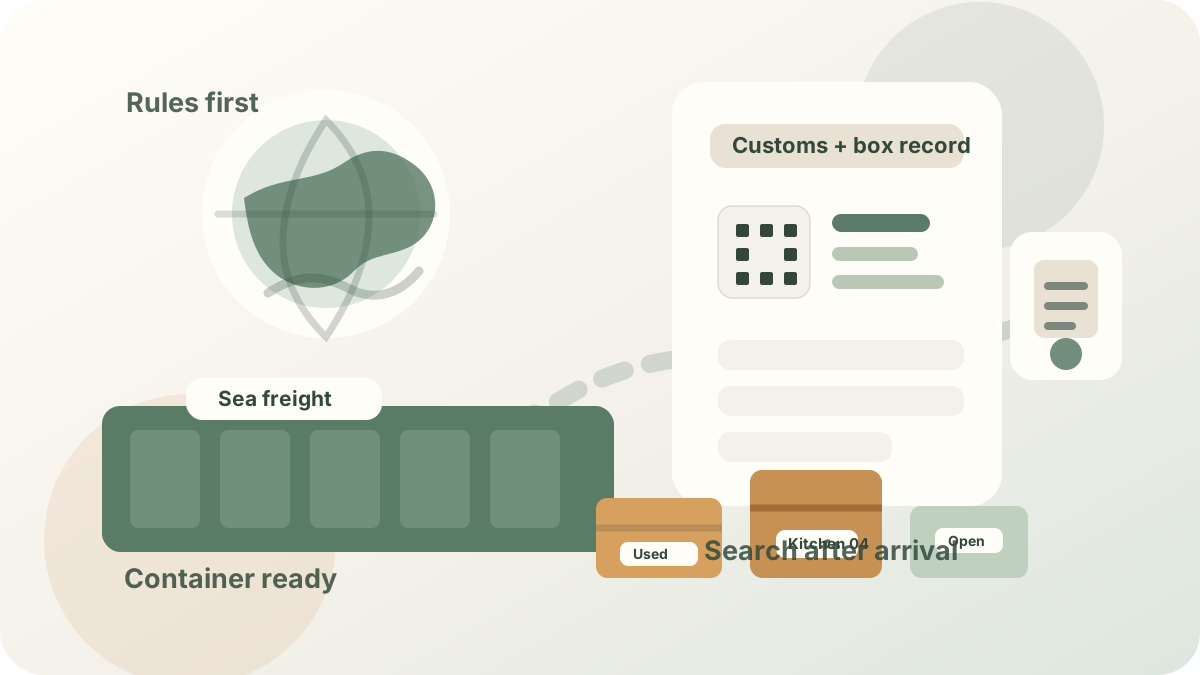
An international move needs two systems: one for customs and one for finding your things later. Start with destination rules, create a specific inventory, choose the right shipping method, avoid sending items that are cheaper or safer to replace, and keep box records clear enough for both officials and your future self.
International moving
Cross-border moves reward preparation, not improvisation.
A local move can survive a little chaos. An international move usually cannot.
Once your belongings leave the country, small gaps become harder to fix. A vague inventory can delay customs. A badly packed box may travel through ports, warehouses, vehicles and storage before it reaches you. An appliance that worked perfectly at home may be unsafe or useless in a country with different voltage, plug types or frequency.
That does not mean the move has to feel overwhelming. It means you need to make decisions earlier than you would for a domestic move.
The calmest international moves are built around three questions: what is allowed to enter, what is worth shipping and how will you identify every box when it finally arrives?
1. Start with the destination rules.
Before you pack anything, check the rules for the country you are moving to. Customs, residency status, visas, pet import rules, medication limits, food restrictions, plant and wood controls, vehicle rules and duty relief can all affect what should go into the shipment.
If you are moving to the UK after living abroad, you may be able to apply for Transfer of Residence relief. This can reduce or remove import duty and VAT on used household goods when you meet the conditions. The important word is “apply”. Do not assume relief is automatic just because the items are your own.
Check the current requirements before your goods travel. Relief usually depends on things such as where you have been living, how long you have owned and used the items, whether the goods are for personal use and whether they arrive within the permitted window.
New purchases are different. If you buy furniture, electronics or other goods shortly before shipping, they may be treated as new imports and assessed for taxes or duty. Keep receipts and make sure your mover or shipping agent knows what is new.
This is not the part of the move to guess. If paperwork is missing, customs can hold the shipment, ask for clarification, charge duty or require extra handling. That adds stress at exactly the point where you want your belongings released and delivered.
2. Build an inventory customs can understand.
International inventories need more detail than “kitchen stuff”, “miscellaneous” or “garage”. Those labels may be fine for a tired family member on moving day. They are not helpful for a customs officer.
Use plain, specific descriptions. “Used dinner plates and bowls”, “used children’s books”, “used cotton bedding”, “used hand tools” and “used office paperwork” are much clearer than a mystery category.
Separate used and new items. Add estimated values where required. Keep serial numbers, photos and purchase records for higher-value items. If your mover prepares the packing list, read it before the shipment leaves. You are the person who will live with the consequences if the inventory is too vague.
PackQR is useful here because it helps you keep a private box-by-box record while the outside label stays simple. The public label might say “Kitchen 04 — used tableware”. Your local PackQR record can hold the more detailed contents, photos and notes you do not want printed on the outside of the box.
3. Choose the shipping method around volume and urgency.
International shipping is a trade-off between cost, speed and control.
Air freight is fast, but expensive. It is best reserved for a small essentials shipment: work equipment, clothing, school supplies, documents you are allowed to ship and items you genuinely need before the main container arrives.
Groupage or Less than Container Load shipping can suit smaller moves. Your goods share container space with other shipments, which can reduce cost. The trade-off is extra handling, a less direct timetable and more dependence on consolidation schedules.
Full Container Load shipping is usually the cleaner option for a whole-home move. A 20-foot container is often used for a smaller household or a two-to-three-bedroom home. A 40-foot container is used for larger homes, bulky furniture or moves that include a vehicle where that is allowed and practical.
Door-to-door service is the easiest to live with because the removal company manages collection, export, shipping, import and final delivery. Terminal-to-terminal can cost less, but you take on more responsibility at both ends. That may work if you understand the ports, paperwork, timings and local transport. It is less attractive if you are arriving tired, without a vehicle or without storage arranged.
4. Treat transit times as planning ranges, not promises.
Port-to-port estimates can make an international move look more predictable than it really is.
A quote may say 20 to 35 days, 45 to 60 days or 65 to 85 days depending on the route. That does not always include collection, export handling, vessel schedules, transhipment, customs clearance, port congestion, local delivery, building access or storage time.
Always ask what the estimate includes. Is it door to door, port to port or warehouse to warehouse? Is the shipment direct, or does it transfer through another port? How often does that vessel sail? What happens if your container is rolled to the next departure?
Build in a buffer. For many moves, it is sensible to assume the main shipment may arrive several weeks later than the first optimistic estimate. That way you can plan accommodation, work clothes, children’s essentials, pet supplies and temporary furniture without panic buying everything twice.
5. Declutter harder than you would for a local move.
Shipping is priced around volume, weight, route and handling. Every box earns its place.
Before you send a sofa across an ocean, compare the cost of shipping it with the cost of replacing it. Do the same with flat-pack furniture, budget bookcases, old mattresses, small appliances, spare kitchenware and anything that only works because it happens to fit your current home.
Some things are worth shipping. Solid wood furniture, antiques, sentimental pieces, specialist equipment, collections and high-quality mattresses may deserve the space. Generic furniture, tired storage units and cheap particleboard often do not.
Decluttering is not only about saving money. It reduces packing time, customs detail, handling risk, insurance questions and the amount you have to store if your home is not ready when the shipment arrives.
Use a simple rule: if an item is not valuable, sentimental, difficult to replace or clearly suited to the new country, question whether it belongs in the container.
6. Be careful with electricals and appliances.
Electrical items cause a lot of international-moving confusion because they look portable. Many are not.
Check voltage, plug type and frequency before shipping anything that heats, cools, spins or runs a motor. High-wattage appliances such as kettles, hairdryers and heaters are often poor candidates for shipping. Large white goods such as washing machines, dryers, fridges and freezers can be expensive to transport and may not be suitable for the destination supply, plumbing, warranty system or kitchen space.
Televisions and monitors are another judgement call. A high-end dual-voltage model may be worth protecting properly. An older screen may cost more to pack, insure and move than it is worth.
Flat-pack furniture deserves similar caution. Particleboard does not enjoy being dismantled, loaded, shipped, stored and rebuilt. If it already wobbles, it is unlikely to improve after an international journey.
When in doubt, replace the everyday item and ship the irreplaceable one.
7. Pack for a long journey, not one van ride.
An international box may be handled many times before it reaches your new home. It can sit in a warehouse, move by lorry, be loaded into a container, travel by sea, pass through customs, go into storage and then be delivered locally.
That changes how you pack.
Use strong boxes. Keep heavy items small. Avoid half-empty boxes that can crush. Do not mix liquids with textiles or paperwork. Protect corners. Bag small parts and tape them to the item or record their location clearly. Use moisture protection where your mover recommends it, especially for long sea routes and climate changes.
Some insurers and removal companies require professional packing for certain goods. Check before you pack fragile, high-value or specialist items yourself. A cheaper packing decision can become expensive if it affects a claim later.
Keep prohibited or restricted goods out of the shipment. Food, alcohol, plants, soil, seeds, aerosols, chemicals, batteries, medicines and animal products may be controlled or banned depending on the destination. Rules vary, so check before anything goes into a box.
8. Plan the arrival gap before you leave.
International moves often include a gap. You may arrive before your goods. Your shipment may clear customs before your permanent home is ready. You may need temporary accommodation, temporary furniture or storage at one end of the journey.
Containerised storage, sometimes called vault storage, is useful when your goods are staying within the removal company’s system. It reduces handling and can be simpler if the shipment is waiting for a final delivery date.
Self-storage is better when you need regular access. It may suit items you are bringing separately, seasonal goods or things you will collect once you understand the new home. Look for climate control if you are storing wood, instruments, photographs, paperwork, textiles, vinyl, art or anything sensitive to damp and temperature changes.
Check the insurance position carefully. Marine insurance, storage insurance and home contents insurance may not cover the same period or the same risks. Ask where cover starts, where it ends and what evidence you need if something is missing or damaged.
9. Make delivery day easy to direct.
When the shipment finally arrives, everyone is tired of waiting. That is exactly when a simple room system helps.
Use clear destination labels: Kitchen, Bedroom 1, Bedroom 2, Study, Garage, Loft, Storage or Open First. If the new home is unfamiliar to the delivery team, put paper room signs on doors and a simple floor plan near the entrance.
Check condition as items come in. Photograph obvious damage before unwrapping everything. Note missing box numbers. Keep delivery paperwork, inventory lists and insurance documents together until the claim window has passed.
PackQR can help after delivery because each box can stay searchable even if it goes straight into a spare room, garage or storage unit. You do not need to unpack everything immediately to know where the printer cable, winter coats, tax folder or spare bedding went.
Move across borders with fewer mystery boxes.
An international move is a logistics project, a paperwork project and a home move all at once.
Start with the rules. Apply for relief where it is available and relevant. Create a specific inventory. Choose the shipping method that fits the volume and urgency. Question anything that is cheaper, safer or simpler to buy again. Plan storage and temporary essentials before the shipment leaves.
Then give every box a clear identity.
PackQR is being developed as a private, pay-once moving box scanner for iPhone and iPad. Create boxes, add contents, print privacy-safe QR labels, scan when you need the detail and search your local records after the move.
Because when your belongings have crossed borders, ports and warehouses, the last thing you need is a room full of boxes that all say “misc”.
General information: This guide is practical information, not legal, financial, medical or regulated professional advice. Requirements and risks vary by location and circumstances.