
At a glance
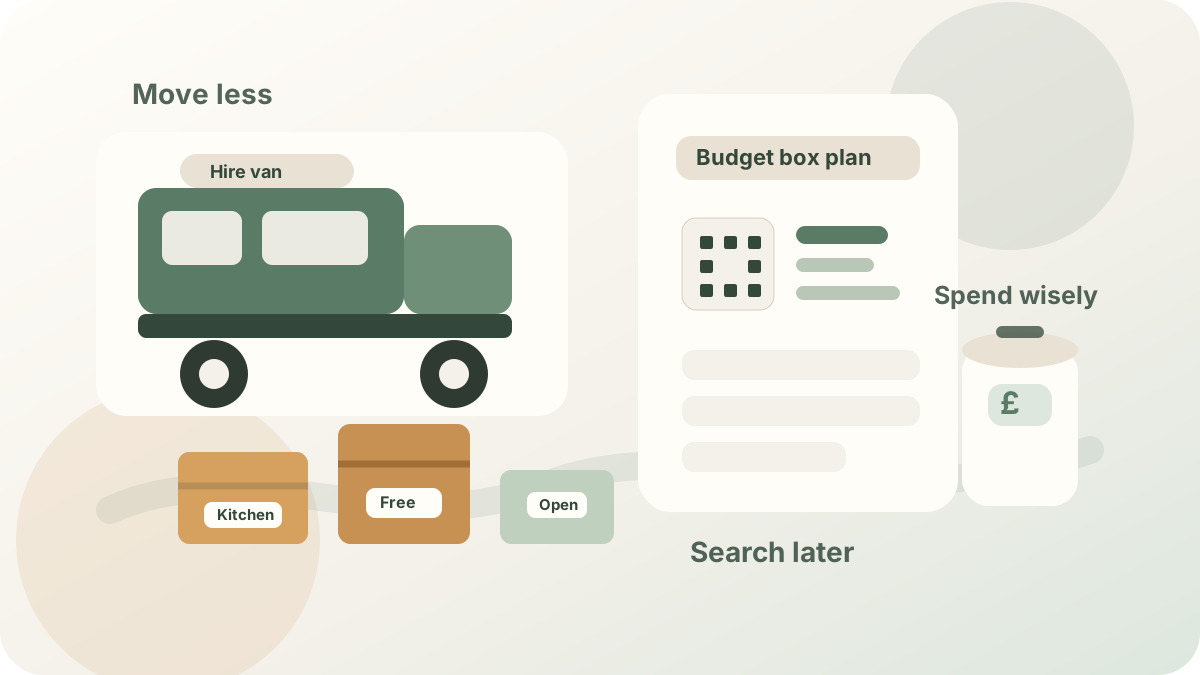
A budget move works best when you cut cost without cutting the system. Move fewer things, time the van or movers carefully, source packing materials for free, keep the Open First box accessible and make the boxes you do move searchable.
Budget moving
Spend less without making the move harder.
Moving home can be expensive before the first box is even packed. Van hire, removal quotes, fuel, packing supplies, storage, takeaway food and replacement items all add up quickly.
A tight budget does not mean you have to improvise every part of the move. In fact, budget moves need more structure, not less. The less you spend on full-service support, the more useful your plan, labels and packing system need to be.
The aim is simple: move fewer things, pay for the help that matters, avoid buying what you can source for free and arrive with boxes you can still understand.
1. Move less before you book anything.
The cheapest box to move is the one you never pack.
Before you compare vans or removal quotes, reduce the volume. Go room by room and separate items into keep, sell, donate, recycle and dispose. Furniture, books, clothes, spare kitchenware, electronics and long-forgotten storage items are the usual places to start.
Selling useful items on Facebook Marketplace, Gumtree or local community groups can help in two ways. You reduce the number of items that need lifting, loading and transporting, and you add a little extra money back into the moving budget.
Do not let selling become another source of stress. Set a deadline. If an item has not sold by then, decide whether it should be donated, recycled, collected by the council or taken with you.
PackQR can help you keep the “coming with us” items clear. Create records for the boxes you are actually moving, not the things you have already decided to let go.
2. Choose the level of help that fits the move.
A full-service removal company is convenient, but it is not the only option. For smaller homes, local moves, student moves or staged moves, a self-drive van can be much cheaper.
That saving comes with responsibility. You need to choose the right vehicle, check the insurance excess, understand the fuel and return rules, and be honest about what you can lift safely.
A hybrid move is often the sensible middle ground. Move boxes, clothes, bedding and smaller items yourself, then pay professionals for heavy, awkward or high-value pieces. A large wardrobe on a narrow staircase can cost more if it damages a wall, injures a helper or breaks halfway down.
Friends and family can make a budget move possible, but they still need a simple system. Give helpers clear room names, visible box numbers and handling notes. Keep valuables, documents, medication, keys and the Open First box in a “do not load” area unless they are travelling with you.
A pizza-and-tea moving day is much better when nobody is guessing where every box goes.
3. Pick the date with demand in mind.
Moving costs are not the same every day. Fridays, Mondays, bank holidays and the end of the month are often busier because many people want to complete, collect keys or use a weekend for unpacking.
If your move is flexible, ask about mid-week availability. Tuesday and Wednesday can be easier to book and may be cheaper than peak days. Sunday can also be worth checking, although some van depots and movers charge differently at weekends.
Season matters too. Late spring and summer are popular moving periods. Winter moves can sometimes be quieter, although you will need to plan for shorter daylight, wet weather and holiday closures.
If you are in a property chain, your date may not be fully in your control. Estate agents, solicitors and completion arrangements often push people towards Friday. Check your contract requirements first, then use any flexibility you do have.
4. Find packing materials before you buy them.
Cardboard, tape and padding can quietly eat into a moving budget. Start looking for free or low-cost materials early, while you still have time to be selective.
Supermarkets, bookshops, off-licences and local retailers often have sturdy delivery boxes. Wine and spirit boxes can be especially useful because they are reinforced and built to carry weight. Community groups, Freecycle, Nextdoor and Buy Nothing groups are also good places to ask for post-move supplies.
Only keep boxes that are clean, dry and strong. Weak boxes are not a saving if they collapse on the stairs. Use smaller boxes for books and heavy items, larger boxes for bedding, cushions and lightweight bulk.
You can also replace some paid padding with things you already own. Wrap breakables in towels, T-shirts, socks and blankets. Use suitcases for heavy items. Use laundry baskets for awkward soft goods that are moving directly from one home to the next.
Free materials still need a system. Label each box with a room and number, then record the contents privately while you pack.
5. Save money by packing the first night properly.
One of the hidden costs of moving is buying things you already own because you cannot find them.
Pack an Open First box or bag that stays accessible. Include the things you will need before proper unpacking begins: kettle, mugs, tea or coffee, snacks, water, toilet roll, toiletries, towels, chargers, medication, basic tools, bin bags, cleaning wipes and a change of clothes.
Plan down the freezer, fridge and pantry in the weeks before the move. The less food you pay to transport, the less you risk wasting. Keep a simple first-night meal plan so you are not forced into expensive emergency takeaways because the pans, plates or tea bags are buried.
In PackQR, mark the Open First box clearly so it stands out in your records as well as in the room. It is a small step that can save money, time and frustration on arrival.
6. Furnish slowly, not expensively.
A new home can make old furniture feel wrong. Try not to solve every empty corner in the first week.
Measure the rooms, live with the layout for a short while and buy only what you know will work. Facebook Marketplace, Gumtree, Freecycle, Olio and local charity furniture stores can all be useful for finding solid pieces at a lower cost.
For second-hand furniture, prioritise structure over surface. Solid timber with scratches is often easier to improve than cheap flatpack that has already weakened. A clean, sanded and repainted piece with new handles can look very different for very little money.
Be more cautious with second-hand electrical items. Check condition carefully and consider proper electrical safety testing before use. For upholstered items, look for the original fire safety label, especially if you are buying, donating or arranging charity collection.
Slow furnishing also helps you avoid paying to move items twice: once into the new home, and again out of it when they do not fit.
7. Let unwanted items go the right way.
If a bulky item is not coming with you, give it a proper route before moving week.
Charities such as the British Heart Foundation, Sue Ryder, Cancer Research UK and local reuse projects may offer furniture collection, but they can only accept items that meet their condition and safety requirements. Upholstered furniture usually needs a visible fire safety label.
Broken or unsuitable items may need a council bulky waste collection or a trip to your local Household Waste Recycling Centre. Book early. Last-minute disposal can be surprisingly expensive when the van is already full and the keys are due back.
Be careful with cheap clearance offers from unknown companies. If waste is fly-tipped, responsibility can become complicated. Use licensed waste carriers and keep records where needed.
Responsible disposal is part of a budget move because it stops unwanted items becoming paid-for cargo.
8. Keep cheap from becoming chaotic.
The main risk of a low-cost move is not that it looks scruffy. It is that nobody knows where anything is.
Use a simple public label on every box: room, number and handling note. Kitchen 03. Bedroom 02. Office 01 — heavy. Do not write private contents, valuables, documents or electronics on the outside.
Then keep the detail somewhere searchable. With PackQR, each box can have a private local record with contents, notes, photos, room names and handling flags. Helpers can follow the outside labels. You can scan or search when you need the detail.
That matters even more when you are moving on a budget. Replacing a missing charger, buying another tool or opening ten boxes to find one pan all costs money in small, irritating ways.
Move lighter, not blindly.
A cheaper move is not only about paying less. It is about making fewer avoidable mistakes.
Move less. Ask for help carefully. Choose the date with demand in mind. Reuse packing materials. Keep essentials accessible. Furnish slowly. Dispose of unwanted items properly.
Then give every box a place and a record.
PackQR is being developed as a private, pay-once moving box scanner for iPhone and iPad. Create boxes, add contents, print privacy-safe QR labels, scan when you need the detail and search your local records after the move.
Because the best budget move is not the one where everything feels improvised. It is the one where every pound, box and helping hand is used well.
General information: This guide is practical information, not legal, financial, medical or regulated professional advice. Requirements and risks vary by location and circumstances.