
At a glance
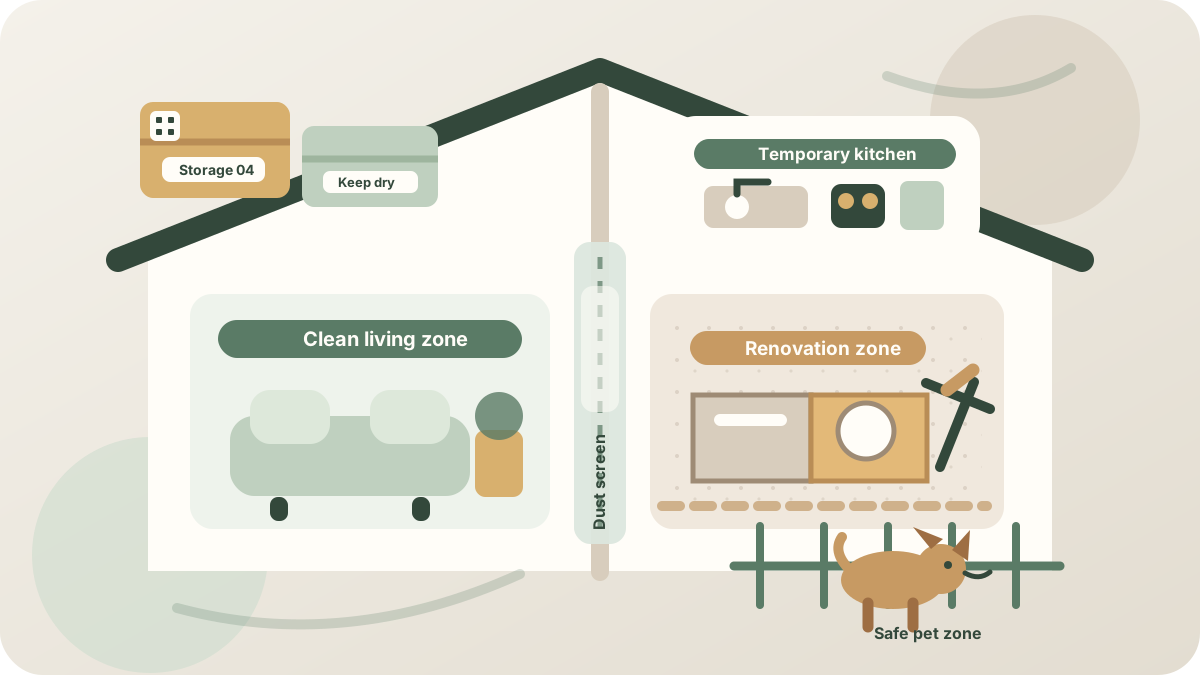
Create one clean living area, remove as many belongings as possible and make sure you can still cook, wash and care for pets safely. Expect dust, noise and reduced privacy, but balance those difficulties against rental costs, quicker decisions and greater oversight of the work.
Living through renovation
Moving out was the obvious plan.
When we first planned the renovation of our kitchen, utility room and en-suite, we assumed we would need to leave the house.
We allowed for six to nine months in rented accommodation and began looking for somewhere nearby that would also accept our dog.
The search quickly became one of the most difficult parts of the project. Suitable short-term rentals were limited, pet-friendly options were even harder to find and the additional cost placed increasing pressure on the renovation budget.
Eventually, staying at home stopped looking like the risky alternative and became the only practical way to make the project work.
It was tiring, disruptive and occasionally overwhelming. But it also gave us more control, avoided the cost of running a second home and allowed us to make decisions as the work progressed.
1. Decide whether staying is genuinely practical.
Living through building work is not suitable for every project.
Before committing to it, confirm that the house will retain the basic services needed for day-to-day life. At a minimum, consider:
- Whether electricity will remain available.
- Whether you will have hot and cold water.
- Whether at least one toilet and shower will remain usable.
- Whether there is a safe route through the property.
- Whether children or pets can be kept away from working areas.
- Whether the builders can separate the site from your living space.
We were fortunate to keep electricity and water for almost the entire build. We also retained one functioning bathroom after losing the en-suite.
Without those essentials, remaining in the house would have been much harder to justify.
Ask the contractor for a realistic programme before making the decision. A few weeks of disruption is very different from living without a kitchen or bathroom for several months.
2. Create one protected living area.
The most important part of our setup was establishing a room that did not feel like part of the building site.
We cleared the living room of unnecessary furniture, moved a large amount of our belongings into storage and boarded off the space as much as possible.
It became our clean zone: somewhere to sit, eat, work and recover when the builders had finished for the day.
No barrier will stop every trace of construction dust, but proper separation makes a noticeable difference. Use sealed temporary doors or dust screens where possible, and speak to the contractor about extraction and daily cleaning.
Avoid keeping soft furnishings, books and electronics close to the work. Dust finds its way into small gaps and can be difficult to remove from fabrics, vents and delicate equipment.
3. Remove more belongings than you think necessary.
Renovation work needs space.
Builders require clear access for materials, tools and waste, while household belongings need protection from dust, moisture and accidental damage.
Moving furniture and stored items out of the affected rooms made the project easier for everyone. It also reduced the amount of cleaning and unpacking required afterwards.
Before placing anything in off-site storage:
- Photograph valuable items.
- Record what has been stored.
- Use strong, clearly labelled boxes.
- Keep important documents and irreplaceable belongings with you.
- Confirm that the storage facility is dry and secure.
- Check that your insurance covers belongings away from the home.
Keep the information visible on each box simple. A room name, box number and handling instruction may be enough.
A private inventory can hold the detailed contents. With PackQR, each stored box can have its own record, including photographs and item notes, without advertising valuable or personal contents on the outside.
4. Build a temporary kitchen that can support daily life.
The temporary kitchen does not need to be attractive. It needs to be safe, clean and easy to use.
We reused units and sections of worktop from the old kitchen, then added a second-hand sink. The drainage ran through a partly open window. It was unconventional, but it gave us running water and a usable preparation area.
A small camping-style electric hob became our main cooking appliance, and we kept the existing fridge operating throughout the work.
A basic renovation kitchen might include:
- A fridge.
- A kettle.
- A microwave or small electric hob.
- A clean food-preparation surface.
- Drinking water.
- Washing-up facilities.
- Sealed storage for food and utensils.
- A nearby fire blanket or suitable extinguisher.
Keep the temporary kitchen away from dust-producing work and do not overload extension leads. Any improvised plumbing or electrical arrangement should be checked for safety.
Simplify meals during the busiest stages. Cooking elaborate dinners is rarely realistic when space is limited and the house is noisy.
5. Plan carefully for pets.
Our dog affected several practical decisions.
We gave half of the garden to the builders and fenced off the remaining area so the dog could use it safely. This reduced our outdoor space, but it created a clear boundary between the pet and the construction site.
Building work introduces open doors, sharp materials, loud noises and unfamiliar people. Even a normally calm animal may become anxious or try to escape.
Agree access routes and working boundaries before the project begins. Make sure tradespeople know that a pet is present, and do not assume a temporary barrier will always remain closed.
During particularly noisy, dusty or hazardous stages, arrange for pets to stay with a friend, family member or suitable day-care service.
6. Accept that the house will stop feeling private.
One of the hardest adjustments was losing the normal separation between home and work.
The builders arrived at around 7:00 each morning. From that point, the house belonged partly to the project.
There was noise, movement and a constant flow of questions. We invited fewer people over, ate out more often and spent more time away from the house simply to have a break.
Set working hours with the contractor and agree which parts of the property are private. Decide how access will work if nobody is home and where tools, materials and waste can be left.
A predictable routine will not remove the disruption, but it makes the experience easier to manage.
7. Prepare for dust rather than trying to eliminate it.
Construction dust is persistent.
It travels through gaps, settles on clean surfaces and reappears shortly after it has been removed. Even well-managed projects produce more dust than most households expect.
Use sealed barriers between working and living areas. Keep internal doors closed and store clothes, bedding and food in enclosed containers.
A vacuum with a suitable fine-particle filter can help with daily cleaning. Avoid sweeping fine dust, as this may send it back into the air.
Do not spend every evening trying to restore the entire house to normal. Concentrate on the areas you need to use and accept that a full clean will be required when the work is complete.
8. Being on-site can speed up decisions.
Living in the property gave us direct access to the work.
Questions about measurements, layouts, fittings and finishes could often be answered immediately. There was less waiting for photographs, emails or return visits, and small issues could be discussed before they became larger problems.
Being present does not mean supervising every task. Constantly watching the builders can create tension and distract everyone from their work.
Agree how decisions will be raised and who has authority to approve changes. Keep a written record of important choices, particularly where they affect cost or timing.
Quick decisions are useful only when they are still properly documented.
9. Staying can reduce costs, but it is not free.
Avoiding rent was the clearest financial advantage.
We did not need to fund a second property, pay another deposit or cover additional moving costs. Being nearby also meant we could oversee more of the day-to-day project ourselves rather than employing a separate project manager.
However, living on-site created other expenses.
We paid for storage, temporary kitchen equipment, extra cleaning and specialist insurance. We also spent more on meals away from home and occasional escapes from the noise.
Compare the full costs of both options rather than looking only at rent. Staying may still be cheaper, but it should have its own realistic budget.
10. Check your insurance before work begins.
Major building work can affect normal household insurance.
Tell your insurer about the renovation before the contractor starts. Your existing policy may restrict cover when the property is undergoing structural work, has open walls or is occupied by tradespeople for an extended period.
We arranged specialist building works insurance. It was a significant expense, but it protected us against risks that a standard policy might not have covered.
Also check:
- Whether the contractor has current public liability insurance.
- Whether the work is covered if part of the property is temporarily unoccupied.
- Whether stored belongings remain insured.
- Whether accidental damage to the existing structure is included.
- Whether you need to notify the insurer when the work is complete.
Do not rely solely on the builder’s insurance. It may protect their activities without covering every risk to your property or possessions.
11. Know when it is time to leave temporarily.
Staying throughout the project does not mean remaining in the house every day.
There may be stages involving demolition, heavy dust, prolonged water shut-offs, unsafe access or strong fumes. A few nights elsewhere can be sensible even when moving out for the entire renovation is not.
Ask the builder to identify the most disruptive parts of the programme in advance. Arrange temporary accommodation for those periods where necessary.
Flexibility can make the difference between an uncomfortable experience and an unsafe one.
The disruption was temporary.
Living through the renovation was an endurance test.
We lost space, privacy and much of our normal routine. There were mornings when the noise began before we felt ready and evenings when the dust seemed impossible to escape.
But staying also kept us close to the project. We could respond quickly, follow the progress and protect more of the budget for the work itself.
When the builders left and the new kitchen and utility room were finally revealed, the difficult months began to feel temporary rather than defining.
It was not easy, but it made the project possible. Knowing what we know now, we would make the same decision again.
General information: This guide offers practical information rather than building, insurance, electrical or safety advice. Requirements vary by property, project and location. Speak to appropriate qualified professionals before major renovation work begins.