
At a glance
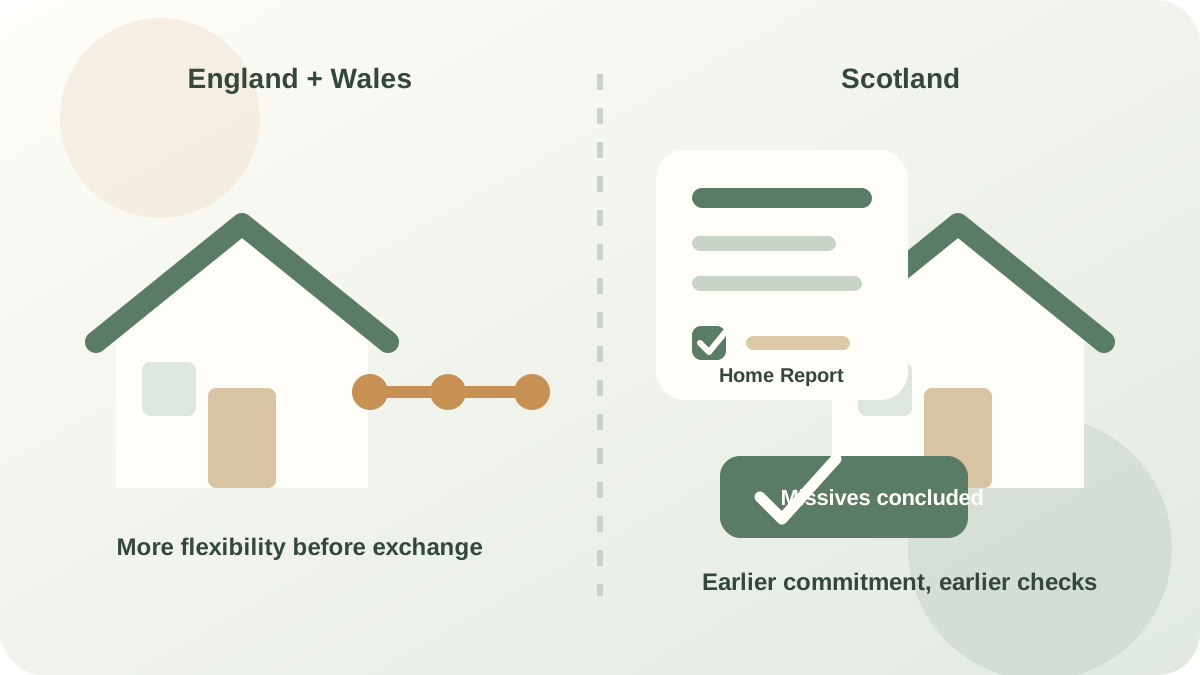
In England and Wales, an accepted offer is not normally legally binding. In Scotland, buyers and sellers often become committed earlier when missives are concluded, and sellers usually provide a Home Report before marketing.
Home-buying systems
An accepted offer is an important step, but it is not the final agreement
Having an offer accepted can feel like the moment a home becomes yours.
In England and Wales, however, the buyer and seller are not normally legally committed at this stage. The sale becomes binding later, when contracts are exchanged.
The period between an accepted offer and exchange may last for several weeks or months. During that time, the buyer’s solicitor carries out searches and legal checks, the mortgage lender completes its work and surveys may be arranged.
Until exchange, either side may decide not to continue.
This does not mean every purchase is likely to collapse. It does mean that plans should remain flexible until the legal commitment has been made.
The property chain can affect your timetable
Many purchases in England and Wales form part of a property chain.
You may be buying from someone who needs to complete their own purchase. Their seller may also be waiting for another transaction. Each household is connected to the next.
When one sale is delayed or withdrawn, several other moves may be affected.
This can make it difficult to confirm a moving date early. Even when your own paperwork is ready, another person in the chain may still be waiting for a mortgage offer, search result or legal document.
Before exchange, treat proposed dates as working plans rather than fixed appointments.
Ask removal companies about their cancellation and postponement terms. Avoid making non-refundable bookings too early, and keep some flexibility around time off work, deliveries and temporary accommodation.
Negotiations can continue before exchange
Because the sale is not yet binding, the price may sometimes be renegotiated before contracts are exchanged.
A seller may accept a higher offer from another buyer. This is often described as gazumping.
A buyer may also attempt to reduce their offer, sometimes close to exchange. This is known as gazundering.
These situations do not occur in every move, but the possibility can add uncertainty to an already demanding process.
Good communication with your estate agent and solicitor can help you understand whether the transaction is progressing normally. It is also sensible to avoid assuming that money already spent on surveys, legal work or moving arrangements will always be recoverable if the sale does not proceed.
The Scottish process is designed to create commitment earlier
Scotland uses a different legal system for residential property purchases.
Instead of exchanging contracts in the same way as buyers and sellers do in England and Wales, solicitors negotiate a series of formal letters known as missives.
Once the missives are concluded, the agreement becomes legally binding.
This point may arrive earlier in the moving process than exchange does in England and Wales. It can provide greater certainty, but it also means the buyer must be comfortable with the purchase before becoming committed.
Withdrawing after missives have been concluded may have serious legal and financial consequences.
Review the information before making a firm offer
Most homes marketed for sale in Scotland must have a Home Report.
The report is arranged by the seller and normally includes:
- a survey of the property’s condition;
- an Energy Performance Certificate;
- a property questionnaire completed by the seller.
This gives prospective buyers useful information before they submit an offer.
Read the report carefully. Pay particular attention to repairs, valuations and anything that may affect your mortgage or future costs.
A buyer may still decide to obtain additional specialist advice. This may be useful when the report identifies a possible problem or when the property is unusual, older or has been significantly altered.
The Home Report provides a starting point. It should not be treated as a reason to rush a decision.
Make sure your finances are ready
In Scotland, a solicitor will usually submit the formal offer on the buyer’s behalf.
Before instructing your solicitor to proceed, make sure you understand the proposed price, entry date and any conditions attached to the offer.
You should also be satisfied that your deposit and mortgage arrangements are realistic.
A mortgage agreement in principle can be helpful, but it is not the same as a final mortgage offer for the property. Speak to your lender, broker and solicitor about what still needs to be completed before you become legally committed.
Earlier certainty works best when the necessary checks have already been carried out.
Compare the two systems
| Feature | England and Wales | Scotland |
|---|---|---|
| Accepted offer | Normally not legally binding | Formal offer is handled through solicitors |
| Binding point | Exchange of contracts | Conclusion of missives |
| Property information | Buyer commonly arranges a survey | Seller usually provides a Home Report |
| Risk before commitment | Either party may usually withdraw | Commitment may happen earlier |
| Moving date | Often depends on the wider chain | Entry date is agreed through the legal process |
The exact timetable will vary in both systems. A straightforward Scottish purchase can still be delayed, while an English or Welsh transaction with no chain may progress smoothly.
The important difference is where legal commitment sits within the process.
Moving within England or Wales
Keep your plans flexible until contracts have been exchanged.
You may find it helpful to:
- check whether removal deposits can be transferred to another date;
- avoid booking non-refundable services too early;
- keep regular contact with your solicitor and estate agent;
- ask what remains outstanding elsewhere in the chain;
- consider whether homebuyer protection insurance is suitable for you.
Insurance products vary, and exclusions may apply. Read the terms carefully before relying on a policy to cover costs if a purchase falls through.
Moving within Scotland
Complete as much due diligence as possible before making a formal offer.
Read the Home Report, discuss any concerns with your solicitor and confirm the position with your mortgage provider.
Once missives are concluded, the purchase is legally binding. It is therefore important to understand the terms rather than relying only on the expected moving date or the excitement of having an offer accepted.
Certainty is useful, but it should follow careful preparation.
Moving between Scotland and England or Wales
A cross-border move can bring both systems into the same chain.
You may be selling a home in England while buying in Scotland, or selling in Scotland while purchasing in Wales. One transaction may require early commitment while the other remains uncertain until a later stage.
This can create a difficult timing gap.
Tell your solicitor as early as possible that the move crosses legal jurisdictions. They can explain the risks, communicate with the other professionals involved and help coordinate the proposed completion and entry dates.
You may also need to consider temporary accommodation, storage or a period in which you own two properties. These options may not be necessary, but including them in your planning can reduce pressure if the two transactions cannot complete together.
Plan for the system you are moving within
A move in England or Wales may offer more flexibility before exchange, but that flexibility can create uncertainty.
A move in Scotland may provide legal certainty earlier, but it requires buyers to complete their checks and make decisions sooner.
Neither approach makes moving completely predictable.
What helps is knowing when the agreement becomes binding, which costs may be at risk and how much flexibility to leave in your moving arrangements.
A moving date becomes easier to manage when you understand what still needs to happen before it can be treated as fixed.
General information: This guide is practical information, not legal, financial, medical or regulated professional advice. Requirements and risks vary by location and circumstances.