
At a glance
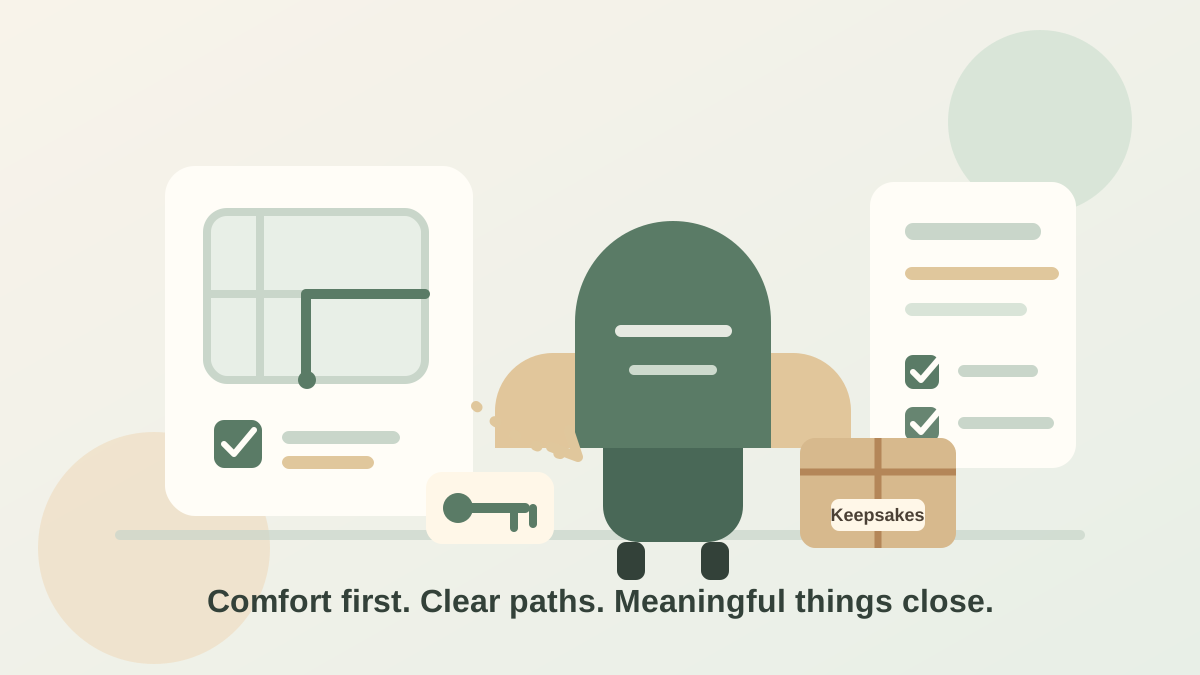
For a retirement move, plan around comfort first. Check the lease and fees carefully, measure the new space, keep walkways clear, choose furniture that supports mobility, pass on heirlooms thoughtfully and make important boxes easy to find later.
Retirement moving
Start with the life you want the new home to support.
A retirement move can bring relief, sadness, excitement and worry all at once. That is completely normal.
You may be leaving a family home that has held decades of routines, visitors, repairs, celebrations and ordinary days. You may also be moving towards less maintenance, easier access, more support nearby and a home that takes less energy to manage.
Try not to frame the move only as “giving things up”. A kinder question is: what do you want daily life to feel like now?
Maybe you want safer walkways, less cleaning, a warmer community, a manageable garden, a guest bed for family or simply fewer rooms asking for attention. Once the goal is clear, decisions about furniture, paperwork and keepsakes become less abstract.
Read the retirement property paperwork slowly.
Retirement developments can work differently from standard flats or houses. Before you commit, ask for plain-English answers in writing and give yourself time to read them with someone you trust.
Pay particular attention to these areas:
- Exit or event fees: some retirement leases charge a fee when the property is sold, sublet, transferred or another defined event happens. Ask what triggers the fee, how it is calculated and whether it changes over time.
- Service charges: these may cover communal gardens, lounges, lifts, emergency call systems, on-site staff, maintenance and management. Ask for recent accounts, planned increases and any reserve fund or major works history.
- Ground rent and lease terms: make sure your solicitor explains any ongoing payments, review clauses and restrictions before you sign.
- Age and occupancy rules: check the minimum age, partner rules, carer arrangements and whether family members can stay for longer visits.
- Pets: never rely on a friendly verbal answer. If a pet is part of your life, get the permission and any future restrictions confirmed in writing.
This is not about assuming something is wrong. It is about entering the next home with clear expectations, especially when your long-term budget and independence are involved.
Make the floor plan do the hard work.
Retirement downsizing is often less about the number of boxes and more about how the new space will feel to move around in.
Get a scaled floor plan of the new home if you can. Measure your current furniture and mark it on the plan before moving day. If a favourite chair blocks the route to the bedroom, the decision is not personal. The room is simply giving you information.
Keep clear paths around the bed, sofa, bathroom door, kitchen units and front entrance. Avoid squeezing furniture into every corner just because it technically fits. A calm home needs space to turn, carry shopping, use a walking aid, welcome visitors and move safely at night.
If you are helping a parent or relative, be gentle here. A large sideboard may represent a whole chapter of life. Start with safety and comfort rather than “we need to get rid of this”. It is much easier to decide together when the conversation is respectful.
Choose furniture for future comfort, not just current habit.
The best retirement home is not the one with the most furniture. It is the one that makes ordinary movement easier.
Prioritise supportive seating with arms, a sensible seat height and enough firmness to stand up from without strain. Be cautious with very low sofas, deep armchairs and soft mattresses that feel cosy but are difficult to get out of.
Remove trip hazards early. Loose rugs, trailing extension leads, crowded hallways and stacks of boxes are small things that can become big problems. If you love a rug, use proper anti-slip backing and keep it away from main routes.
Lighting matters too. Add lamps where you will read, get dressed, take medication or walk at night. A home can be beautiful and still be practical.
Use legacy gifting as a positive part of the move.
Passing on heirlooms before or during a move can be surprisingly comforting.
Instead of waiting until the final week, ask family members which pieces they would genuinely use or treasure. A dining table, sewing box, tool set, photo album or cabinet may mean more when it comes with the story behind it.
Write short notes for special items: who owned them, where they came from, and why they mattered. Sometimes the memory is what turns an object into a gift.
It is also okay if loved ones cannot take everything. Their homes have limits too. When that happens, choose one or two representative pieces, photograph the rest and let the decision be about preserving meaning rather than preserving every object.
Make moving day physically gentle.
A retirement move does not need to be a test of endurance.
If the budget allows, consider a removal company or senior move specialist who can pack, unpack and place furniture rather than simply dropping boxes inside the door. The most helpful support is often the practical kind: the bed made, kettle accessible, medication nearby, curtains hung and the bathroom usable by the first evening.
Ask movers to place boxes inside their destination rooms straight away and keep corridors completely clear. Tape, stacked boxes and half-built furniture do not belong in the main walkway.
Pack one open-first box for comfort as well as function: kettle, mugs, tea or coffee, medication, phone charger, toiletries, nightwear, fresh bedding, basic tools, a lamp bulb, important contacts and a small familiar item that makes the new room feel like yours.
Keep important belongings searchable from the start.
After a retirement move, some items may be used every day, some may go into a spare cupboard and some may move into storage with family or a small unit. The hard part is remembering where everything ended up.
Use simple outside labels such as “Bedroom bedding”, “Kitchen everyday”, “Photos — keep” or “Documents — important”. Then keep more detail in a private inventory.
When released, PackQR will let you create a box record for medication spares, warranties, family photos, winter clothing, keepsakes, guest bedding and important papers without writing private details on the outside. That means you can search later instead of lifting every box or asking, “Where did we put that?”
The best retirement move is not rushed, ruthless or perfect. It is thoughtful. It protects dignity, keeps useful things close and gives the next home room to become comfortable at its own pace.
General information: This guide is practical information, not legal, financial, medical or regulated professional advice. Requirements and risks vary by location and circumstances.