At a glance
A practical moving guide for labelling boxes clearly without revealing valuables, electronics, documents or other private contents to people nearby.
Private box labelling
Keep your move organised, not exposed.
Moving already creates enough pressure. Boxes may spend time in hallways, vans, storage units, lifts, shared entrances or temporary rooms. Labels such as “TV”, “laptops”, “passports” or “jewellery” can make unpacking easier, but they can also reveal exactly which boxes contain the items you most want to protect.
The safer approach is to separate public moving instructions from your private inventory. Let the outside of the box show where it goes and how it should be handled. Keep the detailed contents somewhere only you can access.
1. Use room names instead of item names
Write the destination room on the box rather than a list of contents. “Kitchen”, “Bedroom”, “Home Office” or “Loft” gives movers the information they need without revealing whether the box contains expensive cookware, electronics or personal papers.
For extra clarity, combine the room with a box number, such as “Kitchen 03” or “Office 02”. That gives every box a clear identity without turning the label into a public contents list.
2. Number every box and keep a private master list
A numbering system is one of the simplest ways to stay organised discreetly. Label each box with a unique number, then keep the detailed contents in a private list on your phone, tablet, laptop or notebook.
For example, the outside of the box might only say “Box 042 - Bedroom”. Your private list can say that Box 042 contains spare chargers, documents and bedside items. Anyone looking at the box sees a harmless identifier; you still know exactly what is inside.
3. Avoid high-value words on visible labels
Do not write words such as “cash”, “jewellery”, “camera”, “console”, “laptop”, “passport”, “deeds” or “medical records” on the outside of a box. Even if the box will only be out of sight briefly, high-value labels create unnecessary risk.
When possible, keep valuables, identity documents, financial paperwork, irreplaceable photos and family heirlooms with you rather than in the moving van. If an item would be difficult or impossible to replace, treat it as a personal carry item.
4. Make handling instructions visible
Privacy does not mean vague labels. You should still make practical handling information easy to see. Labels such as “Fragile”, “This Way Up”, “Heavy”, “Do Not Stack” and “Open First” help people handle boxes safely without exposing the private contents.
These labels are useful because they describe what the box needs, not what the box contains.
5. Use QR labels for private content tracking
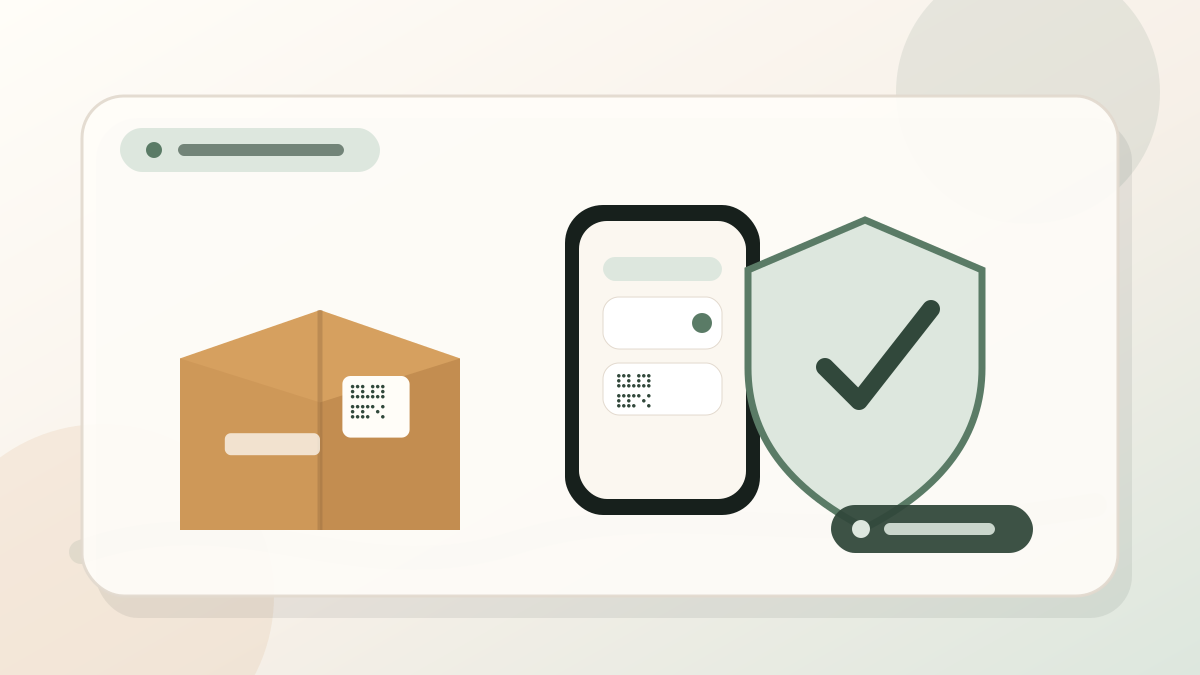
QR labels are a clean way to solve the trade-off between discretion and detail. The label on the box can stay simple: a box number, room, handling flags and a QR code. The full inventory can stay inside your private app or list.
With PackQR, the QR label is designed for moving day rather than public disclosure. The printed label helps you scan and open the right box record, while contents, notes and photos remain in your local app data instead of being printed on the box.
6. Back up your inventory before moving day
Whatever system you use, make a backup before the moving truck leaves. Export your inventory, save photos of important boxes, or keep a copy of your master list somewhere safe. If a box is delayed, misplaced or damaged, a clear record can help you work out what is missing and what needs attention first.
Store that backup carefully. A moving inventory can contain sensitive details about your home, belongings and routines, so it deserves the same care as any other private document.
Take the stress out of your next move
PackQR was built for people who want a calmer, more private way to pack, label, scan and find boxes. You can create box records, add item notes and photos, print privacy-safe QR labels, search locally and keep your moving inventory off public labels.
It is a pay-once iPhone and iPad app with no ads, no subscriptions and no PackQR account required.
General information: This guide is practical information, not legal, financial, medical or regulated professional advice. Requirements and risks vary by location and circumstances.